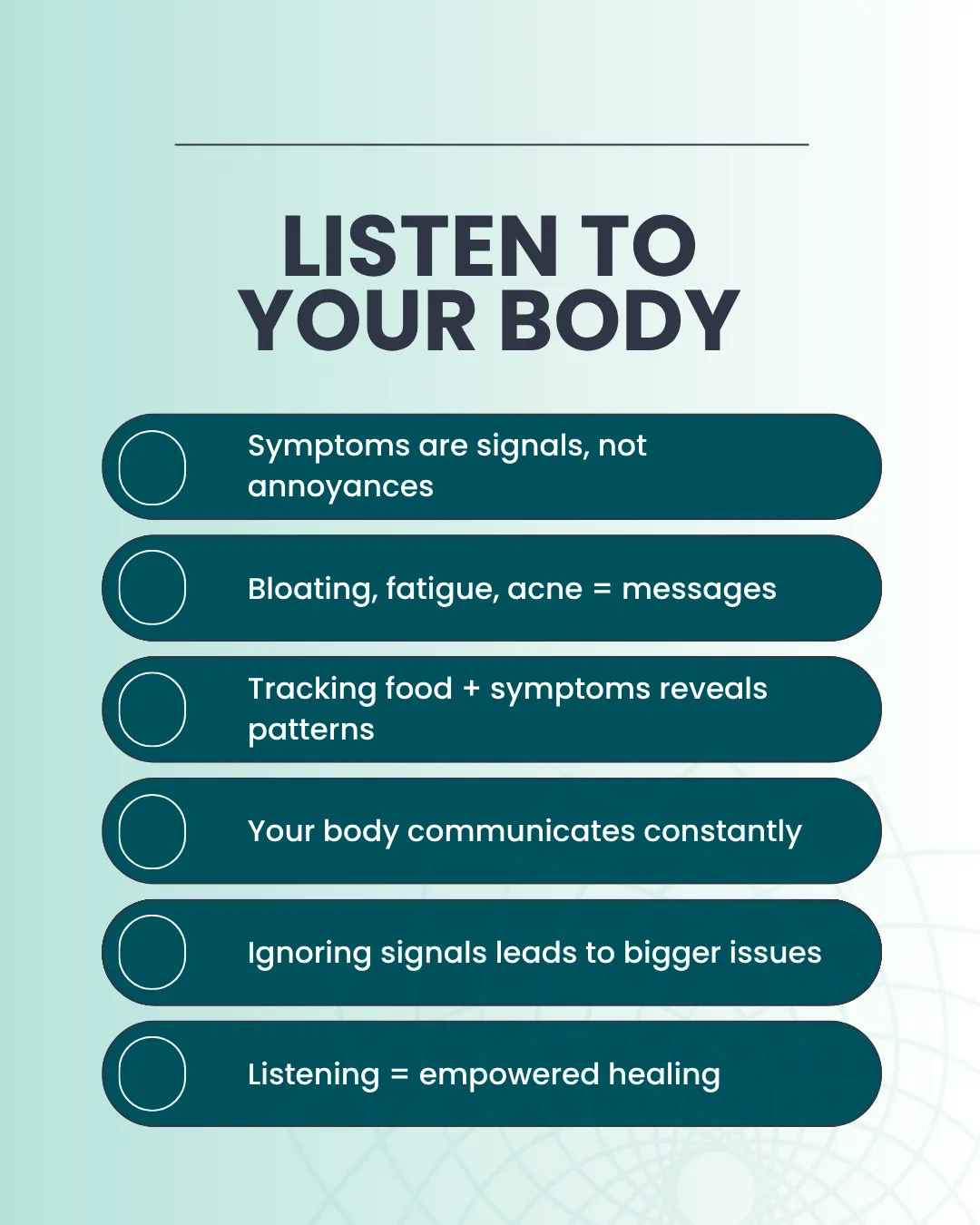
Listen to Your Body's Signals
Why You Should Listen to Your Body
Have you ever thought about how your body talks to you? Every day, it gives you signals. These signals might seem like little annoyances, but they are important messages. Understanding them can help you take charge of your health.
Symptoms are Signals, Not Annoyances
Your body often sends signals through symptoms like bloating, fatigue, or acne. These are not just annoyances. They are messages that your body needs attention. When you treat symptoms as mere problems to eliminate, you might miss out on what your body is trying to tell you.
Think about a time when you were tired all the time. Did you feel like sleeping was the only solution? Maybe there was something more your body was trying to say. It could be about stress, diet, or even needing more exercise. Recognizing the importance of these symptoms is the first step to healthier living.
Understanding Common Symptoms
- Bloating: This can mean different things. It could be about what you ate, or it might be about your body's reaction to stress.
- Fatigue: Feeling tired is more than needing sleep. It might be about your lifestyle, such as poor diet or lack of physical activity.
- Acne: Acne isn't just a skin issue. It might be a sign of hormonal imbalance or dietary choices.
When you start viewing symptoms as messages, you become more aware of your body's needs.
Tracking Food and Symptoms
Understanding your body's language is one thing, but how do you start listening more closely? Tracking your food intake and symptoms is a helpful way to find patterns. Here are some steps to begin:
- Write It Down: Keep a journal of what you eat and how you feel. This will help identify patterns between your diet and symptoms.
- Pay Attention to Patterns: With consistent tracking, you might notice that eating certain foods makes you feel tired or bloated.
- Adjust Accordingly: Once you recognize these patterns, you can start making changes to see if your symptoms improve.
Your Body Communicates Constantly
Your body is always telling you something. It's important to stay attuned to its signals. Here’s how you can better tap into your body's language:
- Stay Mindful: Take a few moments each day to tune into how you're feeling. Are your muscles tense? Do you feel sluggish?
- Be Responsive: If you notice discomfort, pause and think about what your body might be trying to express.
- Consult Professionals: Sometimes, understanding body signals requires help. Don't hesitate to speak to a healthcare provider if needed.
Ignoring Signals Leads to Bigger Issues
When you ignore your body's signals, small issues might grow into bigger problems. For instance, chronic fatigue that goes unattended could lead to more significant health issues. Staying attentive prevents this progression and supports a healthier future.
Listening Equals Empowered Healing
Listening to your body is empowering. It leads to better decision-making and promotes self-care. When you understand what your body is saying, you can make adjustments to your lifestyle, diet, and activities to enhance your wellness.
Listening isn't just about solving problems but also about nurturing and maintaining your health. It's taking proactive measures before things get out of hand, and it strengthens your connection with yourself.
Conclusion
Your body is like a well-oiled machine, giving constant feedback. By paying attention to its signals, like bloating, fatigue, and acne, you engage in a dialogue that promotes healing and well-being. Start today – listen, understand, and take action for a healthier tomorrow.